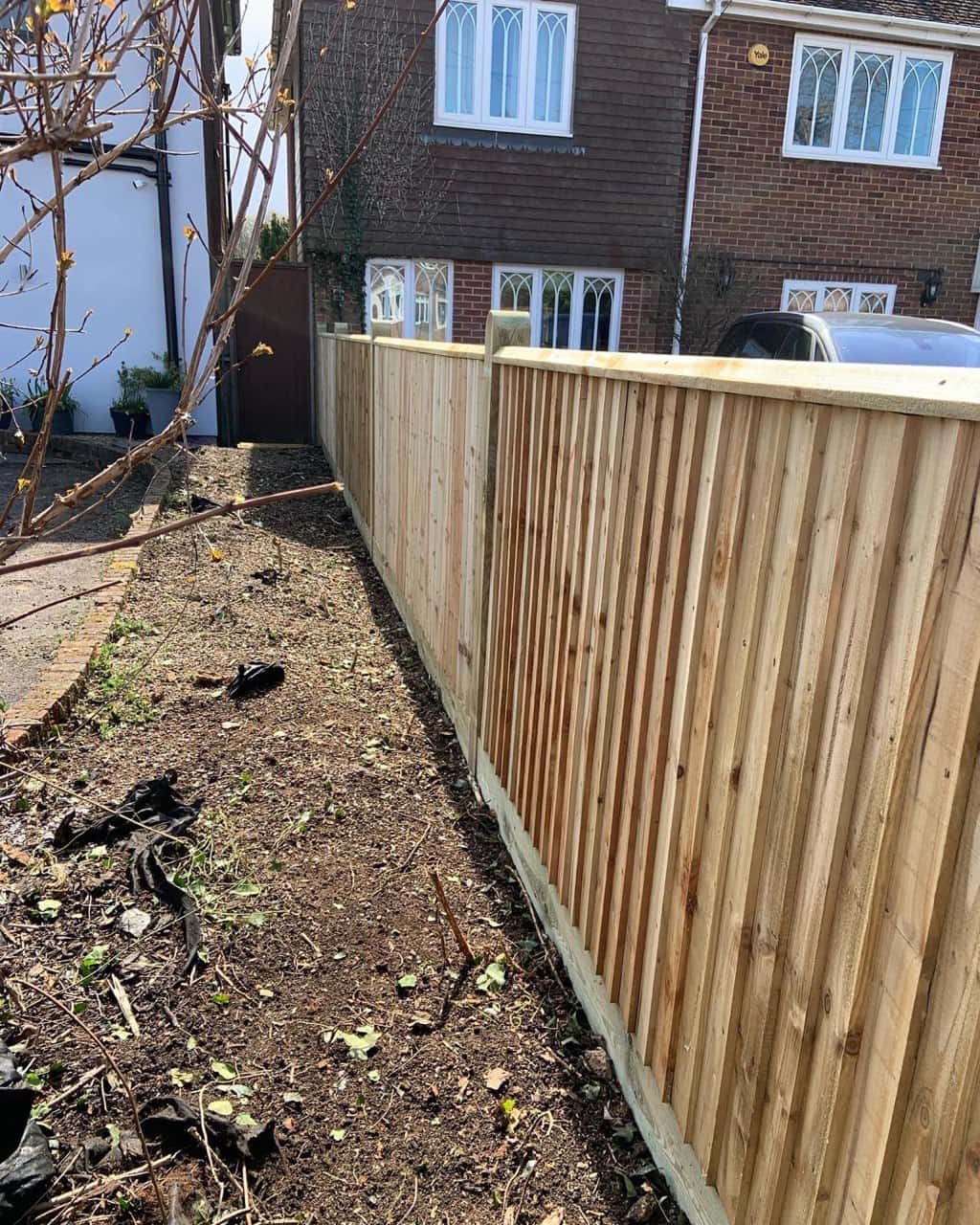
How Professional Fence Repairs Can Extend the Life of an Existing Boundary
A well-installed fence can remain an important part of a property for many years, providing privacy, security and a clearly defined garden boundary. However, constant exposure to wind, rain, changing temperatures and general outdoor conditions will eventually affect even a good-quality fence.
When deterioration appears, complete replacement is not always necessary. Many fencing problems begin in individual posts, panels, boards or fixings while the remainder of the boundary remains perfectly serviceable. Professional repairs can target these weaker areas, restore stability and help prevent localised damage from spreading.
For property owners in Caterham, Surrey, dealing with fencing defects at the right time can therefore be an effective way to extend the useful life of an existing boundary.
Fence Deterioration Does Not Always Affect the Whole Boundary
One of the most important things to understand about fencing is that different sections can deteriorate at different rates.
A long boundary may contain one weakened post while neighbouring posts remain secure. Similarly, one panel may have suffered damage even though the surrounding fencing is still in good condition.
This means the presence of a damaged section does not automatically indicate that the entire fence has reached the end of its useful life.
A professional assessment can establish which components have deteriorated and whether repairing them will restore the boundary effectively.
1. Replacing Weak Fence Posts Can Restore Stability
Fence posts provide the structural support for the boundary. When a post becomes weak, damaged or unstable, the fencing attached to it can begin moving.
Early signs can include:
- A section leaning out of alignment
- Excessive movement during windy conditions
- Panels becoming loose between posts
- Gaps developing between components
- A boundary that no longer feels secure
If the problem is limited to one or several posts, replacing or repairing the affected components can often restore stability without disturbing sound sections unnecessarily.
Why post problems should be addressed promptly
An unstable post places additional strain on neighbouring panels, rails and fixings. Leaving it unattended can therefore turn one structural weakness into several fencing problems.
Correcting the original defect helps protect the surrounding boundary.
2. Damaged Fence Panels Can Often Be Repaired Individually
Panel fencing has the advantage of being divided into separate sections.
If one panel has become damaged while the posts and neighbouring panels remain serviceable, attention can often be concentrated on that particular area.
This can be especially useful where damage has resulted from a localised impact or deterioration rather than a general decline across the complete boundary.
Professional repair ensures the replacement or repaired section is correctly positioned and properly supported rather than simply being attached to weakened surrounding components.
3. Feather Edge Fencing Can Be Repaired in Sections
Feather edge fencing consists of individual boards supported by rails and posts, which means localised deterioration can often be addressed without rebuilding the complete fence.
Individual damaged boards may be replaceable where the supporting structure remains sound.
However, the visible boards should not be considered in isolation. If several boards have become loose, the rails or posts behind them may also require attention.
A professional fence repair therefore considers both the damaged component and the structure supporting it.
4. Loose Fixings Can Be Addressed Before They Cause Further Movement
Not every fencing problem begins with major timber deterioration.
Over time, fixings and connections can become loose, allowing parts of the boundary to move more than intended.
This movement may initially appear relatively minor. During windy conditions, however, repeated movement can place additional stress on surrounding components.
Professional repairs can identify loose connections and determine whether the affected materials remain suitable for secure refixing.
Addressing these smaller defects early can help prevent unnecessary deterioration elsewhere.
5. Leaning Fencing Should Be Investigated Rather Than Simply Straightened
A fence that has started leaning is showing a symptom of another problem.
The cause could relate to one or more supporting posts, connections between components or deterioration within a particular section.
Simply pushing the fence upright does not correct the underlying weakness.
Professional assessment allows the cause to be identified so the appropriate structural repair can be carried out.
Once the weakened component has been addressed, sound sections of the existing boundary can often continue providing useful service.
6. Repairs Can Prevent Damage Spreading Along the Boundary
Fencing components work together.
When one part becomes unstable, the movement can affect adjoining sections. A weakened post, for example, may allow two neighbouring panels to move excessively. Loose panels can then place additional pressure on their fixings.
This is why relatively small defects should not necessarily be ignored.
Early repairs can help contain deterioration within the affected area rather than allowing it to create a larger problem.
7. Storm and Wind Damage May Be Localised
Fences are particularly exposed during periods of strong wind because their large surface area can experience considerable pressure.
However, wind damage does not always affect the entire boundary equally.
One section may be more exposed than another, or an existing weakness may cause a particular post or panel to fail first.
Following visible wind damage, it is useful to assess the complete fence rather than assuming that only the fallen or leaning section requires attention.
A professional inspection can identify whether neighbouring components have also loosened and need securing.
Repairing a Fence Can Restore Privacy
Fencing often plays an important role in making a garden feel private.
Damaged boards, leaning panels and widening gaps can gradually reduce that privacy even when the majority of the boundary remains standing.
Targeted repairs can restore damaged sections and close unwanted gaps while retaining serviceable parts of the existing fence.
This can be particularly effective where the overall boundary remains suitable but one or two areas have become compromised.
Repairs Can Improve the Appearance of an Older Fence
Structural performance should be the priority, but repairing damaged fencing can also improve how the boundary looks.
A fence with a leaning panel, broken board or visibly displaced section can make an otherwise well-maintained garden appear neglected.
Correcting local defects can restore a more consistent appearance and help the boundary sit neatly within the surrounding outdoor space.
Importantly, professional repairs should focus on genuine deterioration rather than replacing sound components purely for appearance.
When Is Fence Repair Usually Appropriate?
Repair can be a practical solution where the majority of the existing boundary remains structurally sound.
Situations where targeted work may be suitable include:
- One or several damaged posts
- Individual broken panels
- Localised feather edge board damage
- Loose rails or fixings
- A limited leaning section
- Localised wind damage
- Small areas where privacy has been compromised
The important factor is the condition of the materials surrounding the damaged section.
If those components remain strong enough to support a reliable repair, retaining them can extend the life of the existing fence.
When Might Repairs No Longer Be Enough?
There eventually comes a point when repeated local repairs are unlikely to provide the best solution.
This is more likely when deterioration has become widespread throughout the boundary.
Signs can include numerous unstable posts, extensive timber deterioration, repeated panel failures and movement across several sections.
In these circumstances, continually repairing individual components may address immediate problems without restoring dependable overall performance.
A professional assessment can determine whether useful sections can still be retained or whether more extensive fencing work is appropriate.
Why the Cause of Fence Damage Matters
Successful repair is about more than replacing whatever looks broken.
Consider a fence panel that repeatedly becomes loose. Reattaching it may appear to solve the problem, but if the supporting post is unstable, the panel is likely to experience further movement.
Professional repair should therefore answer three important questions:
- Which component has failed?
- Why has it failed?
- Are the surrounding components still structurally sound?
Identifying the cause allows the repair to address the actual weakness rather than only its visible symptoms.
Early Attention Can Preserve More of the Existing Fence
The sooner localised deterioration is addressed, the greater the opportunity to retain sound components.
A loose board may be relatively straightforward to deal with while the rail and post behind it remain secure. If movement continues for an extended period, surrounding components can experience additional strain.
The same principle applies to leaning sections and weakened posts.
Early professional attention helps prevent unnecessary deterioration and can extend the useful service life of the boundary as a complete structure.
Why Professional Fence Repairs Are Worthwhile
Effective fence repair requires an understanding of how the different components support one another.
A professional fencing contractor can assess posts, rails, panels, boards and fixings together rather than viewing the obvious damage in isolation.
This approach helps determine whether:
- Localised repair is suitable
- Additional weakened components need attention
- Existing materials can be retained
- Structural stability can be restored
- More extensive work would provide a better solution
The objective should always be to carry out the work the fence genuinely requires.
Professional Fence Repairs in Caterham
Fast Fix Fencing Caterham provides professional fencing services for properties throughout Caterham, Surrey.
If your existing fence has started leaning, individual panels or boards have become damaged, or particular posts are no longer providing adequate support, assessing the boundary early can help prevent further deterioration.
Where the surrounding fencing remains sound, targeted professional repairs can restore damaged sections while retaining serviceable components and extending the useful life of the existing boundary.
Conclusion
A damaged fence does not necessarily need complete replacement. Where deterioration is confined to particular posts, panels, boards, rails or fixings, professional repairs can restore stability and help prevent damage from spreading into neighbouring sections.
The key is identifying the underlying cause rather than simply correcting the most obvious symptom. By repairing weakened components at the right time, more of the existing boundary can often be retained and its useful life extended.
If your fence in Caterham, Surrey is leaning, damaged or beginning to show signs of deterioration, contact Fast Fix Fencing Caterham. We can assess the condition of the boundary and recommend an appropriate repair based on what the existing fencing genuinely needs.
Call us on: 01883 771 099
Click here to find out more about Fast Fix Fencing Caterham
Click here to complete our contact form and see how we can help with your fencing needs.