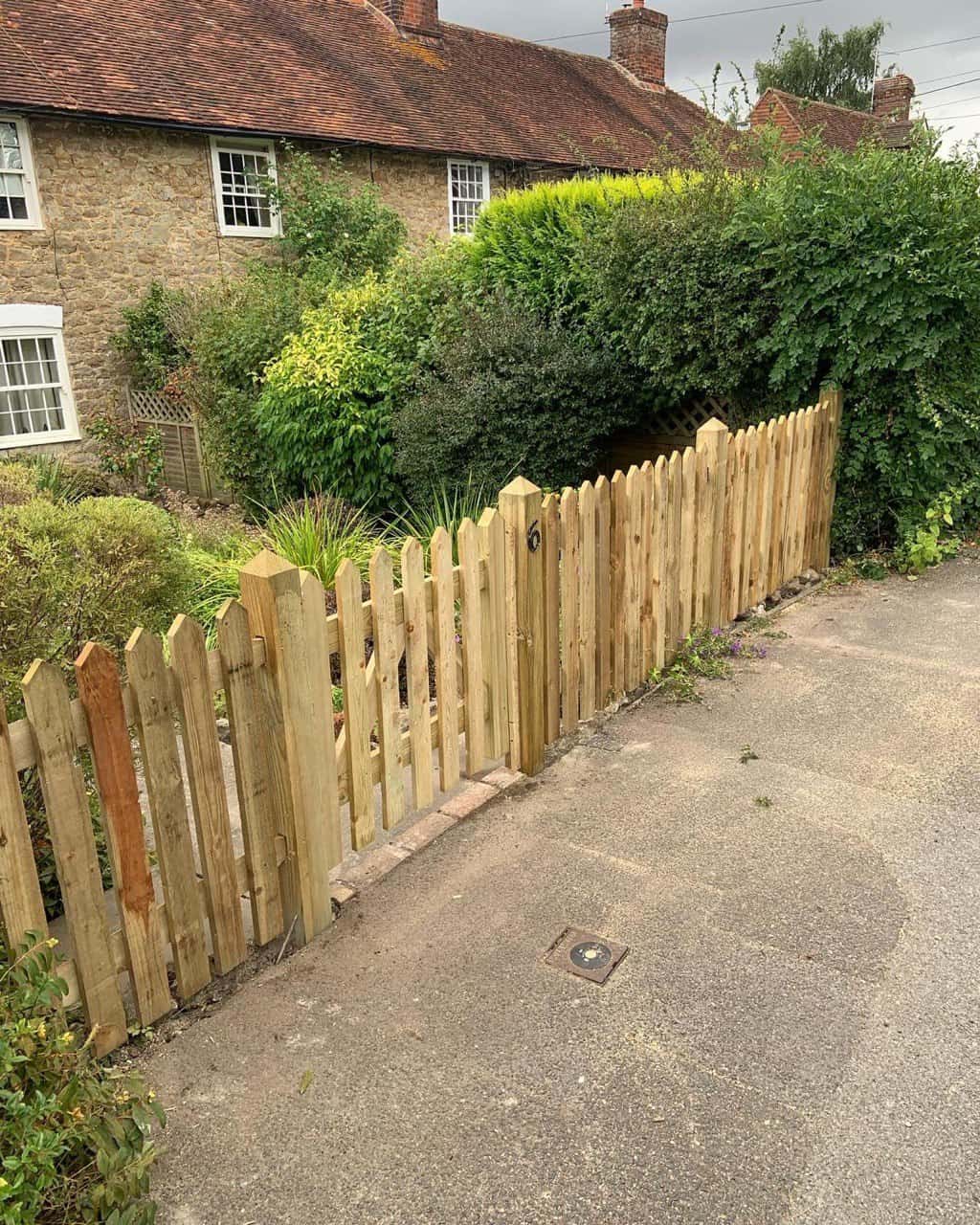
How Can Acoustic Fencing Help Reduce Unwanted Noise Around Your Property?
Unwanted outdoor noise can make it difficult to relax in the garden, open windows or enjoy quieter parts of a property. Traffic, nearby activity, machinery and other recurring sounds may all affect how comfortable an outdoor space feels.
Acoustic fencing can provide a practical way to reduce this disturbance. Unlike ordinary fencing, it is designed to restrict the direct passage of sound. For property owners in Caterham, Surrey, a properly planned acoustic fence can create a noticeably calmer and more usable environment.
How Acoustic Fencing Controls Outdoor Noise
Sound travels in waves and will pass through gaps or move around lightweight obstacles. Acoustic fencing works by placing a solid, substantial barrier between the noise source and the area being protected.
A well-built system can reduce direct sound transmission and force noise to travel over or around the barrier. Although no outdoor fence can eliminate every sound, the correct design and installation can lessen its impact significantly.
Greater Density Than Standard Fence Panels
Many conventional garden panels are designed primarily for privacy and boundary marking. Their lightweight construction may do little to control noise.
Acoustic fencing uses dense, robust materials that are better able to resist sound transmission. Specialist timber boards are commonly arranged to produce a continuous barrier, helping to reflect and absorb a proportion of the sound that would otherwise travel into the property.
The weight and quality of the fence are important. A thin or poorly fitted structure is unlikely to provide the same level of performance as a purpose-built acoustic system.
A Gap-Free Barrier
Even a small opening can allow sound to pass through and reduce the effectiveness of acoustic fencing. Boards must therefore fit closely together, while the bottom of the fence should meet the ground as completely as practical.
Careful attention is also needed around posts, corners and gates. These areas can become weak points if they are not incorporated into the design correctly. Professional installation helps create a consistent barrier rather than a collection of panels with sound-leaking gaps between them.
Suitable Height and Positioning
An acoustic fence generally performs best when it interrupts the direct line between the noise source and the listener. This means its height and position must be considered in relation to the property, garden and source of the disturbance.
A barrier positioned closer to the noise source can often be particularly effective, although every site is different. Changes in ground level, the direction of the noise and the layout of nearby structures may all influence the best location.
A site-specific assessment is therefore more useful than choosing a standard fence height without considering the surroundings.
A Quieter and More Enjoyable Garden
Reducing background noise can make a garden feel more private and relaxing. Seating areas may become more pleasant, conversations can be easier to follow, and everyday sounds within the garden are less likely to be overwhelmed by activity outside the boundary.
Acoustic fencing may be especially useful where homeowners want to create a peaceful patio, children’s play area or general outdoor living space. The result is not complete silence, but a more comfortable balance between the property and its surroundings.
Improved Boundary Privacy
Because acoustic fencing needs to be solid and closely constructed, it can also provide a strong visual screen. This makes it a useful option for properties where privacy and noise reduction are both priorities.
Its substantial appearance can help define the boundary clearly while limiting views into the garden. Various finishes and styles may be used to ensure the fence complements the property rather than looking purely functional.
Strong and Stable Construction
Acoustic panels are typically heavier than ordinary fencing materials. They therefore require correctly spaced posts, dependable fixings and a suitable supporting structure.
Ground conditions must also be assessed before installation. If the posts are not secure, movement can create gaps and weaken the fence over time. Accurate installation protects both the stability of the boundary and its noise-reducing performance.
Where Acoustic Fencing Can Be Useful
Acoustic fencing can help properties affected by several types of regular external noise, including:
- Passing vehicles and road activity
- Nearby commercial or operational activity
- Machinery and equipment
- Busy shared spaces
- Repetitive noise from neighbouring land
The character of the sound matters as much as its volume. Continuous background noise may be easier to reduce than sudden or low-frequency sounds, which can travel differently. A professional assessment can help establish what improvement is realistic for a particular property.
Why Professional Planning Matters
Effective acoustic fencing involves more than installing solid panels. The overall length, height, position, ground contact and treatment of gates or corners all influence the outcome.
Before recommending a system, an experienced fencing contractor should inspect the boundary and identify the direction from which the noise is travelling. This allows the fence to be designed around the actual conditions rather than relying on a general solution.
Good planning also ensures that the completed fence remains practical for access, maintenance and the everyday use of the garden.
Conclusion
Acoustic fencing can reduce unwanted noise by creating a dense, continuous barrier between a property and the source of the disturbance. Its effectiveness depends on suitable materials, sufficient height, careful positioning and an installation that avoids unnecessary gaps.
For homeowners in Caterham, acoustic fencing can help create a quieter garden while also improving privacy and strengthening the appearance of the boundary. Fast Fix Fencing Caterham can assess your property and recommend a solution suited to its layout and noise concerns. Contact our team to arrange a professional fencing assessment in Caterham, Surrey.
Call us on: 01883 771 099
Click here to find out more about Fast Fix Fencing Caterham
Click here to complete our contact form and see how we can help with your fencing needs.